
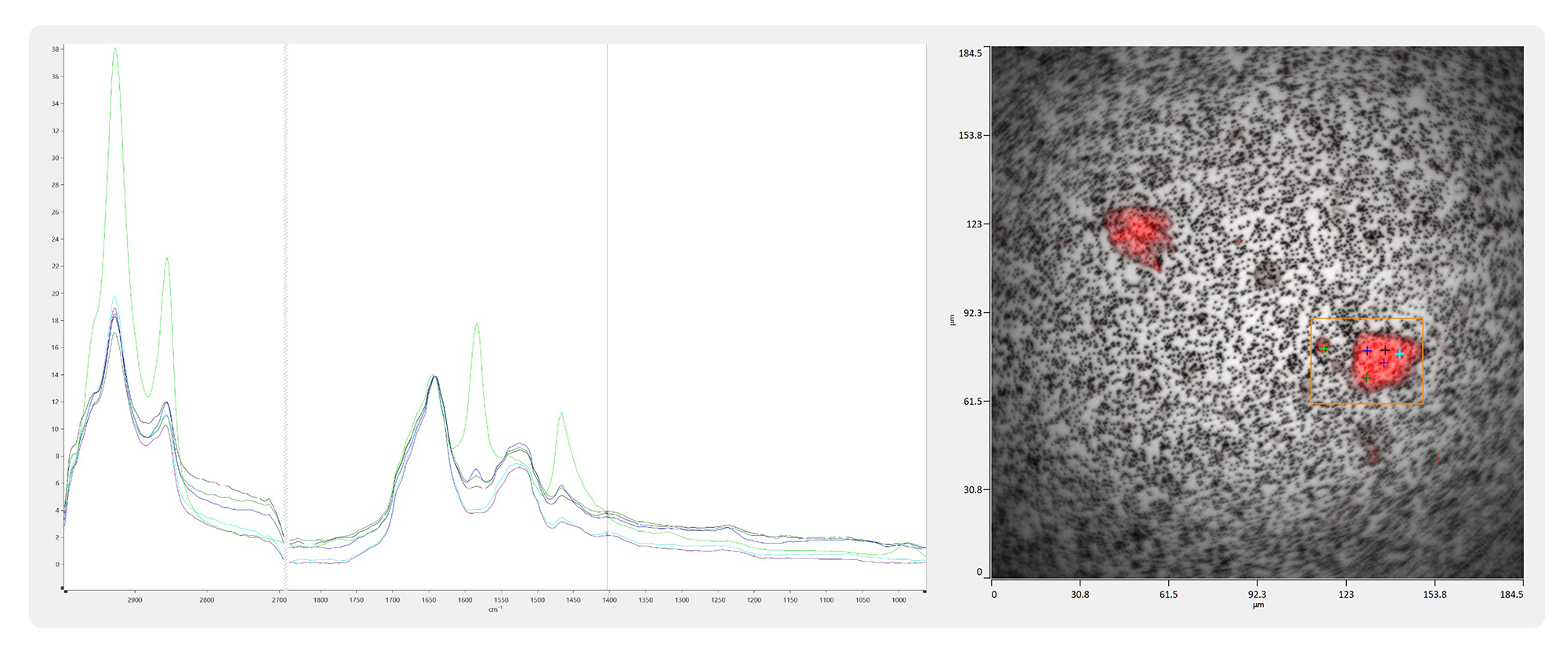
Simultaneous submicron IR and Raman spectroscopy are redefining particulate matter and aggregate analysis in biopharmaceutical research. These advanced techniques probe chemical structures at unprecedented resolutions, overcoming diffraction limits to reveal intricate details of particles at the submicron level. By leveraging optical and photothermal effects, they precisely identify molecular vibrations and inelastic light scattering, offering complementary insights with broad chemical characterization. Researchers are now able to tackle longstanding industry challenges like particle characterization, drug safety, and efficacy enhancement with unmatched performance. These methods deliver non-destructive, high-resolution analyses that transform how we understand and improve pharmaceutical products.
The Need for Advanced Analytical Techniques in Biopharmaceuticals
Biopharmaceutical formulations composed of delicate biological molecules demand meticulous quality control and characterization. Even minute variations in molecular structures or the presence of aggregates can compromise a drug’s efficacy and safety. Traditional methods, such as Fourier-transform infrared (FTIR) spectroscopy and standalone Raman microscopy, while useful, have limitations in spatial resolution, sample preparation and susceptibility to interferences, such as autofluorescence.
This is where Optical Photothermal Infrared (O-PTIR) spectroscopy is hugely beneficial. By combining the strengths of IR and Raman spectroscopy into a single platform, O-PTIR achieves submicron spatial resolution through the innovative use of photothermal effects and optical detection. When infrared light is absorbed by a sample, it induces a subtle localized heating that causes a refractive index change. This variation is detected optically, enabling the system to bypass traditional IR (FTIR/QCL) diffraction limits. By capturing both IR and Raman spectra from the same spot at the same time and with the same resolution, O-PTIR provides precise, co-located chemical imaging with unprecedented clarity. This innovation has far-reaching implications for biopharmaceuticals, including the characterization of protein aggregates, excipients, and contaminants.
Understanding Submicron IR and Raman Spectroscopy
Submicron IR spectroscopy involves analyzing molecular vibrations to identify chemical bonds and functional groups within a sample. On the other hand, Raman spectroscopy leverages inelastic scattering of light to provide complementary chemical information. Integrating these techniques in O-PTIR technology enables researchers to overcome the diffraction limits of traditional IR systems and achieve resolutions well below one micron. Read more about traditional IR vs Raman microscopy here.
One of the standout features of O-PTIR is its ability to perform label-free chemical imaging. Unlike fluorescence-based methods that require staining or labeling, O-PTIR preserves the sample’s native state. This non-destructive approach is particularly advantageous for studying sensitive biological materials like proteins, lipids, and complex excipients.
Applications in Biopharmaceutical Analysis
- Protein Aggregation Studies: Aggregation of therapeutic proteins is a huge concern in drug development. Protein aggregates can trigger immune responses and reduce therapeutic efficacy. Submicron IR and Raman spectroscopy provide detailed insights into aggregation mechanisms, helping researchers optimize formulations and storage conditions.
- Characterizing Excipients and Additives: Excipients play a vital role in drug delivery systems, influencing stability and bioavailability. O-PTIR technology enables precise identification and mapping of excipients within formulations, ensuring consistency and quality.
- Detection of Particulate Matter: Contaminants, even at submicron levels, can significantly affect drug safety. O-PTIR’s combined IR and Raman capabilities allow for rapid and accurate identification of foreign particles, from organic impurities to microplastics.
- Cellular and Tissue Analysis: Beyond formulations, O-PTIR is invaluable in studying biological samples. Researchers can map chemical distributions within cells and tissues, facilitating drug discovery and disease research.
Overcoming Traditional Limitations
Traditional analytical techniques face several challenges when applied to biopharmaceuticals:
- Diffraction Limits: Conventional IR systems, such as FTIR and QCL-based systems, are limited by diffraction, resulting in spatial resolutions of several to ~15 microns. This makes it difficult to analyze particles of a few microns or smaller effectively.
- Sample Preparation: Techniques like FTIR often require extensive sample preparation or contact with an ATR crystal, which can alter the sample’s native state and risk cross-contamination
- Spectral Interference: Fluorescence interference in Raman spectroscopy can obscure results, especially when analyzing complex biological samples.
O-PTIR eliminates these issues by enabling non-contact reflection IR measurement. This works by detecting changes in the intensity of the reflected visible probe beam whilst the sample is illuminated with different infrared wavelengths – all without direct contact. This method minimizes sample disturbance, preserving delicate biological structures and prevents cross-contamination. The reflected visible light and photothermal-induced refractive index changes allow for precise analysis at submicron scales. This is particularly significant for biopharmaceutical analysis, where preserving the native state-sensitive compounds is critical for obtaining accurate chemical and structural data. Its ability to acquire IR and Raman spectra simultaneously from the same submicron area ensures comprehensive chemical characterization.
The Future of Biopharmaceutical Analysis
Integrating submicron IR and Raman spectroscopy in biopharmaceutical research represents a paradigm shift. By combining high spatial resolution with comprehensive chemical imaging, O-PTIR addresses critical industry needs:
- Drug Product Knowledge: Submicron chemical and morphological analysis of protein therapeutic formulations and drug delivery systems improve product knowledge to deliver safe and efficacious drug products.
- Regulatory Compliance: Submicron particulate matter detection enhances particulate matter control strategies to support regulatory compliance standards.
- Reduced Costs: Non-destructive and simultaneous measurements streamline workflows, reducing the need for multiple instruments and analyses.
Interested in Simultaneous IR and Raman Microscopy?
Simultaneous submicron IR and Raman spectroscopy, pioneered by our groundbreaking O-PTIR technology, addresses traditional limitations in biopharma and delivers unparalleled chemical insights for researchers. Discover how these cutting-edge tools can empower your research to develop safer, more effective drugs in our webinar on sub-micron IR and Raman analysis of biopharmaceuticals. Or, contact Photothermal today to learn how we can support your biopharmaceutical analysis with industry-leading solutions.
