
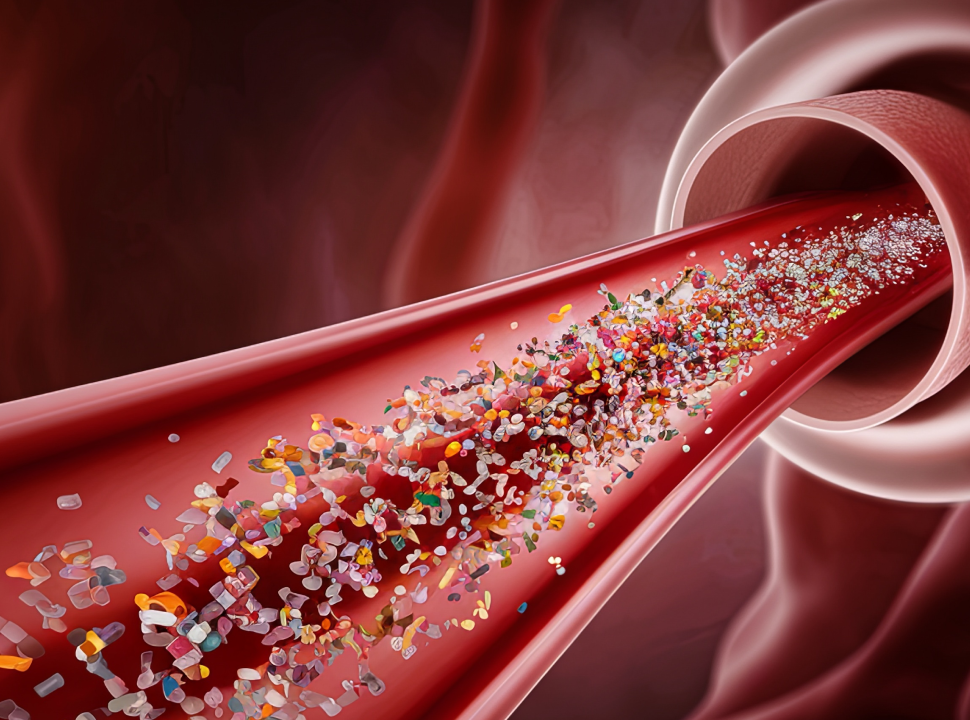
Please join Dr Markus Brandstetter, from Recendt in Linz, Austria, and Dr Mustafa Kansiz from PSC, in this two-part webinar to learn how submicron IR (O-PTIR) has been used to study microplastics (MPs) and even nanoplastics (NPs) as small as 200nm in animal model tissues and 3D cell cultures directly.
Detecting microplastics (MPs) and nanoplastics (NPs) below 10 microns—especially in biological tissues—has long been a major analytical challenge. Traditional direct infrared techniques like FTIR and QCL are effectively limited to particles above 10–20 microns, leaving the most biologically relevant nanoplastic fraction undetectable.
Optical Photothermal Infrared Spectroscopy (O-PTIR) is changing that.
This breakthrough technique enables label-free, high-resolution detection of MPs and NPs down to 200 nm, overcoming the spectral size/shape artefacts and spatial resolution limits of direct IR techniques and the fluorescence interference and poor sensitivity of Raman spectroscopy. O-PTIR delivers rapid, non-destructive, and automated MP/NP analysis in even the most complex biological samples.
Join us to discover how O-PTIR is transforming micro/nanoplastic research—finally making it possible to detect the size fractions that matter most for environmental and human health.
Webinar Highlights:
✅ Breaking the 10-micron barrier – Detecting microplastics and nanoplastics down to 200 nm in biological tissues
✅ O-PTIR vs. Traditional Techniques – Advantages over direct IR (FTIR/QCL) and Raman for high-resolution, artefact-free imaging and spectroscopy
✅ Automated Reliable Analysis – Learn how featurefindIR™ is automating the measurement process
✅ Real-World Applications – Case studies from in vitro and in vivo models demonstrating microplastic detection in tissues
✅ Implications for Health & Safety – Understanding the role of nanoplastics in disease and exposure risks
Who Should Attend?
🔬 Academic Researchers – Environmental scientists, toxicologists, and biomedical researchers studying microplastic exposure
🏥 Contract Testing & Analytical Labs – Labs specializing in environmental monitoring, toxicology, and material analysis
🌍 Regulatory & Public Health Experts – Professionals focused on microplastic regulation and health impact assessments
🧪 Industry Scientists – Experts in material science, pharmaceutical, and food safety sectors interested in contamination analysis
Don’t miss this opportunity to gain cutting-edge insights into microplastic detection! Register now to stay ahead in the fight against invisible micro/nanoplastics.
The webinar and workshop will be recorded for later on-demand viewing with opportunities to ask questions during and after the events.