
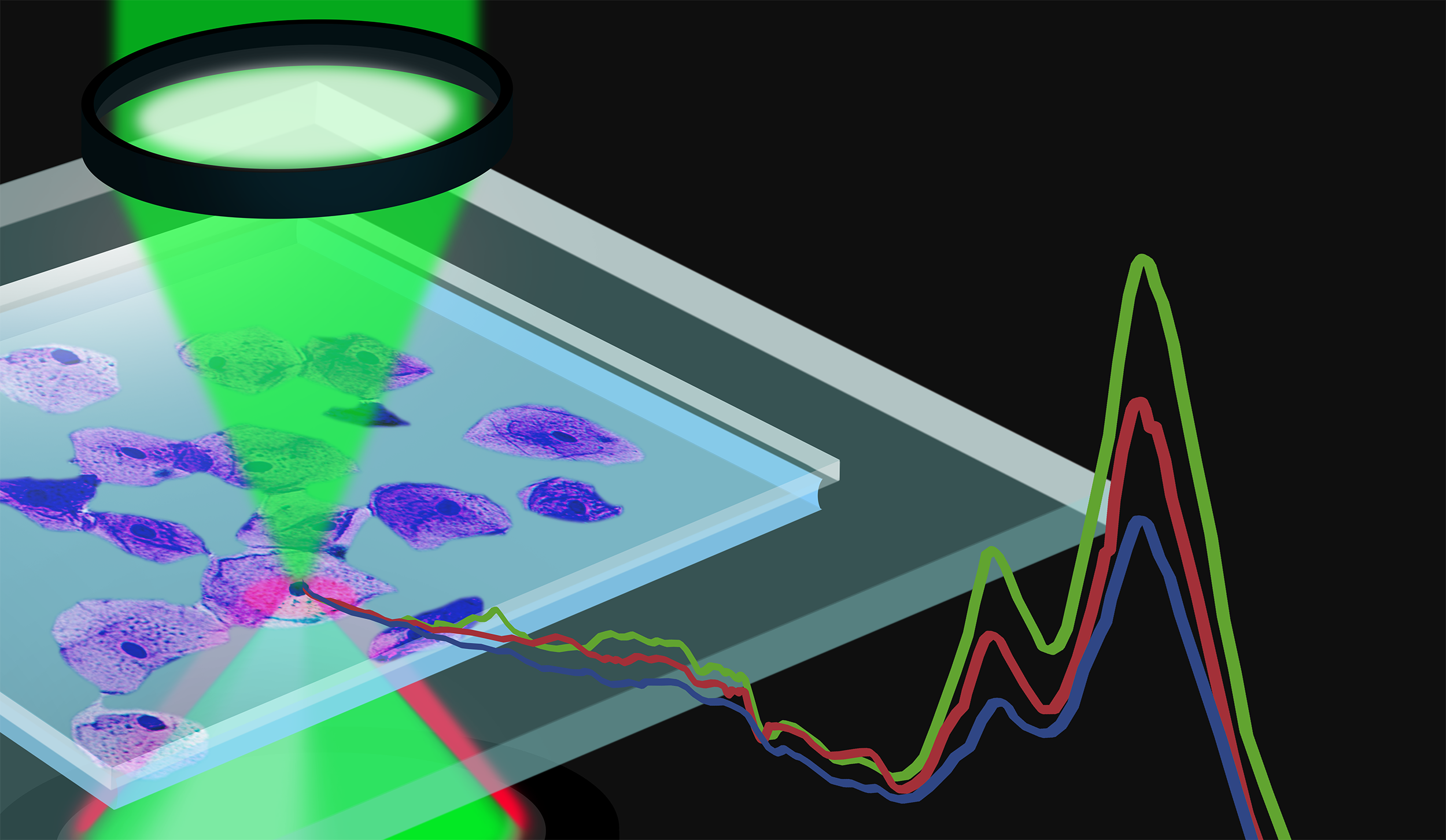
Understanding the intricate biochemical compositions and distributions within cells is fundamental to advancements in life sciences and medical research. Traditional imaging methods, while valuable, often require staining or labelling that can alter the native state of biological samples. Optical Photothermal Infrared (O-PTIR) spectroscopy offers a revolutionary solution: label-free, non-destructive imaging with submicron spatial resolution. This cutting-edge technology enables researchers to study cellular structures and biochemical processes in unprecedented detail, preserving the integrity of samples and advancing discoveries in cellular biology and beyond.
The Challenges of Traditional Cellular Imaging
For decades, fluorescence microscopy and other staining techniques have been the go-to methods for studying cells. However, while they have many advantages, these approaches present several limitations:
- Sample Alteration: The addition of dyes or fluorescent labels can modify the native biochemical state of the sample, potentially leading to artefacts or inaccurate data. The addition of these labels is also known to perturb the native metabolism of cells
- Limited Information: Many traditional fluorescence imaging methods focus on specific components within cells, often missing the broader biochemical context.
- Photobleaching and Toxicity: Fluorescent dyes can degrade under intense light exposure, and prolonged imaging can damage live cells.
These challenges highlight the need for a technique that can provide comprehensive chemical information without compromising sample integrity. This is where O-PTIR excels.
What Makes O-PTIR Unique?
O-PTIR spectroscopy represents a paradigm shift in cellular imaging. This technology delivers high-resolution, label-free chemical imaging. Here’s how it works:
- Photothermal IR detection enables biochemical imaging: When infrared light is absorbed by a sample, it induces subtle localized heating that causes a change in the refractive index. O-PTIR optically detects this change, optically with a short wavelength visible laser, enabling submicron spatial resolution without the diffraction limitation (> 15 micron) spatial resolution of traditional IR systems.
- IR spectroscopy of cells allows one to simultaneously and with spatial distribution, probe the overall biochemical profile of the cell/tissue, with the most abundant macromolecules, such as proteins (including secondary structure), lipids, nucleic acids and carbohydrates being the most dominant. For enhanced specificity, stable isotopic labelling (eg. deuterium or 13C/15N) can be used, or more recently, IR tags have been employed, where IR active, but small moieties, such as azide or nitrides, can be added to molecules. These moieties, have unique absorbances, well away from the main biomolecular spectral region, thus providing a path for enhanced specificity and sensitivity, but without the use of bulky tags, like those used in fluorescence imaging
- Non-Destructive Imaging: Since O-PTIR does not rely on stains or dyes, it preserves the native biochemical state of the sample, making it ideal for studying delicate biological systems.
- Complimentary O-PTIR & Fluorescence imaging: While O-PTIR can be used separately, O-PTIR and Fluorescence imaging can be co-located to provide a high degree of molecular specificity and for subsequent chemical imaging, with the fluorescence imaging being able to act as a ‘guide’ to the spectroscopic measurement. This synergistically unites the specificity strengths of fluorescence imaging and the broad and simultaneous chemical characterization strengths of IR spectroscopy.
Applications in Cellular Imaging
Mapping Lipid and Protein Distributions: O-PTIR excels at identifying and mapping biomolecules within cells. For instance, researchers can locate and distinguish between lipids and proteins based on their unique vibrational signatures, enabling a deeper understanding of cellular organization and metabolism.
Studying Disease Mechanisms: Diseases often cause subtle biochemical changes within cells. O-PTIR’s ability to detect these changes at the submicron level makes it a powerful tool for investigating conditions like cancer, neurodegenerative disorders, and metabolic diseases. O-PTIR is particularly powerful in the study of neurodegenerative diseases as this combines two strengths of O-PTIR: protein secondary structure sensitivity and high spatial resolution. Many neurodegenerative diseases are associated with protein misfolding, and many of these protein misfoldings become aggregates. Hence, detection at the submicron scale is important.
Drug-Cell Interactions: Evaluating how drugs interact with cellular components is crucial for drug development. O-PTIR provides detailed chemical maps of drug distribution and its effects on cellular biochemistry, supporting more effective therapeutic strategies.
Analyzing Cellular Heterogeneity: Cellular populations are often heterogeneous, with individual cells exhibiting unique biochemical profiles. O-PTIR enables single-cell analysis, offering insights into this variability and its implications for health and disease.
Advantages of O-PTIR Over Traditional Methods
- Label-Free Imaging: Unlike fluorescence-based techniques, O-PTIR does not require staining, eliminating the risk of sample alteration.
- High Spatial Resolution: With submicron precision, O-PTIR provides detailed chemical maps that are unattainable with conventional IR systems.
- Comprehensive Data: The simultaneous acquisition of IR and Raman spectra delivers a more complete picture of cellular biochemistry. Coupled with sequential fluorescence imaging, an even more thorough sample characterization is possible, whilst still adhering to standard life science sample preparation protocols.
- Versatility: O-PTIR is compatible with a wide range of samples, from live cells to fixed tissues, making it a versatile tool for various research applications.
The Future of Cellular Imaging
O-PTIR is poised to revolutionize cellular imaging, addressing long-standing challenges and opening new research avenues. By preserving the integrity of biological samples while delivering detailed chemical information, this technology supports breakthroughs in various biopharmaceutical applications, including:
- Cancer Research: Understanding tumor microenvironments and identifying potential therapeutic targets.
- Neuroscience: Investigating the biochemical basis of neurodegenerative diseases.
- Drug Discovery: Accelerating the development of effective treatments by providing insights into drug-cell interactions.
- Regenerative Medicine: Analyzing the biochemical properties of stem cells and their differentiation pathways.
Interested in Label-Free Cellular Imaging?
Optical Photothermal Infrared spectroscopy redefines what’s possible in cellular imaging. Its label-free, non-destructive capabilities provide researchers with a powerful tool for exploring the biochemical intricacies of cells with unmatched precision. Whether you’re studying disease mechanisms, developing new therapies, or unravelling the complexities of cellular biology, O-PTIR offers the accuracy and depth you need to succeed.
Discover how O-PTIR can transform your cellular imaging research. Contact Photothermal today to learn more about our innovative solutions and how they can empower your work.
