
FULL PUBLICATION
“Interestingly, the application of O-PTIR made it possible to overcome the limitations previously encountered with both μSR-FTIR and μRaman spectroscopies. This novel technique, in fact, allowed to unequivocally identify the particles in exam as a geranium lake pigment.”
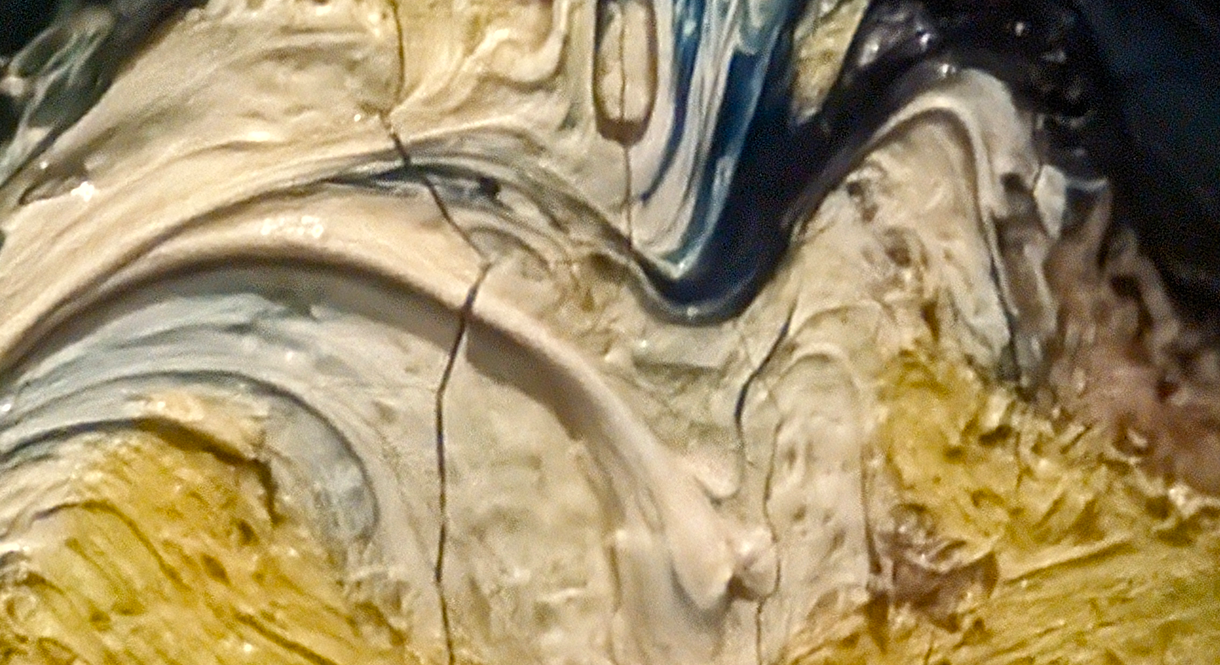
For the first time, submicron O-PTIR spectroscopy has chemically identified 2μm pink pigment particles as geranium lake, in a tiny fragment of Van Gogh’s painting, L’Arlésienne.
A study done by De Wael found the non-contact nature of O-PTIR data collection provides full compatibility to other analytical techniques, such as XRD and EDX, to enhance the understanding of Van Gogh’s work—without altering surface morphology and chemistry.
It was discovered that the high resolution and sensitivity of the O-PTIR technique requires less material for a successful analysis, thus improving the overall integrity of invaluable artwork and increasing spectral purity (less overlap).
Due to the limited size of these particles, synchrotron FTIR was unable to identify them. Whilst Raman microscopy, even at 785nm, suffered
from fluorescence.
In this research, submicron O-PTIR technique unmasks chemical analysis in details that are hidden within the paintings previously, due to limited spatial resolution. However, this time it is found without destroying the sample for cultural heritage and conservation applications, providing information that other state-of-the art techniques cannot.
Dr. Victoria Beltran, Dr. Andrea Marchetti, Gert Nuyts, Margje Leeuwestein, Dr. Christophe Sandt, Dr. Ferenc Borondics, Prof. Karolien De Wael
